

***
MAHA Is Dead: WHO Issues Official Guidance On GLP-1 Obesity Drugs, As Trump Admin Set To Flood Americans With These Drugs To Lose Weight, After Admitting They Are Harmful To Kids’ Health
RFK previously derided GLP-1 prescriptions as part of “the overmedicalization of our kids” in the “MAHA Report” in May, claiming doctors are being forced to prescribe them due to corporate greed.
Obesity and weight loss GLP-1 drugs are primed and ready to flood the market in 2026, as the World Health Organization (WHO) recently gave its first-ever international guidance on how the drugs should be taken and prescribed.
Last month, The WinePress covered the top ten trends in the Rothschild-affiliated The Economist magazine, with one of the main trends (as seen on the cover art) being a raft of GLP-1 drugs issued to the public for weight loss or to not gain weight.
The Economist wrote:
The appetite for weight-loss drugs, known as GLP-1 agonists, has been insatiable since they hit the market a decade ago. In 2024 global spending on them reached $54bn, a figure that is sure to rise in the coming years. These drugs, better known under their brand names of Wegovy, Ozempic, Mounjaro and Zepbound, do not merely promise trimmer waistlines but also seem to reduce the risks of a variety of maladies of the heart, liver and kidneys. As pharmaceutical firms elbow each other for a slice of the pie, the buffet of options will grow in 2026.
One big change to watch for will be the arrival of the first GLP-1 drugs that can be taken orally. Novo Nordisk, the Danish company behind Wegovy and Ozempic, is preparing to launch a pill version of semaglutide, those drugs’ active ingredient, with an average weight loss, after a year, of 16.6%. A rival pill, orforglipron, from Eli Lilly, the American maker of Mounjaro and Zepbound, delivered a 12.4% reduction. Though pills are less effective than jabs, which can reduce weight by 16-23% after one year, they are far more convenient. But Ahmed Ahmed of Imperial College London notes that the pills may fall short of these results outside controlled clinical settings. With a daily pill rather than a weekly jab, patients may be more likely to forget doses, or choose to skip an occasional pill to avoid unwelcome side-effects.
In other words, expect Americans and other countries to make GLP-1 drugs a mainstay in their medicine cabinets. Americans in particular will no longer have to worry about diet and lifestyle habits as much, and can take these pills on and off when they choose to counteract the effects of overeating, or to maintain a certain body image, but at the same time run the risk of overdosing because they are now in pill form, but while suffering the short and long term consequences. These drug manufacturers will also see their revenues ascend, coming off the high from all the money they pocketed in 2020-2022.
On December 1st, the WHO issued its formal guidance on taking GLP-1 drugs.
From its press release:
In September 2025, WHO added GLP-1 therapies to its Essential Medicines List for managing type 2 diabetes in high-risk groups. With the new guideline, WHO issues conditional recommendations for using these therapies to support people living with obesity in overcoming this serious health challenge, as part of a comprehensive approach that includes healthy diets, regular physical activity and support from health professionals.
“Obesity is a major global health challenge that WHO is committed to addressing by supporting countries and people worldwide to control it, effectively and equitably. Our new guidance recognizes that obesity is a chronic disease that can be treated with comprehensive and lifelong care,” said Dr Tedros Adhanom Ghebreyesus, WHO Director-General. “While medication alone won’t solve this global health crisis, GLP-1 therapies can help millions overcome obesity and reduce its associated harms.”
[…] The new WHO guidance contains two key conditional recommendations:
-
GLP-1 therapies may be used by adults, but excluding pregnant women, for the long-term treatment of obesity. While the efficacy of these therapies in treating obesity and improving metabolic and other outcomes was evident, the recommendation is conditional due to limited data on their long-term efficacy and safety, maintenance and discontinuation, their current costs, inadequate health-system preparedness, and potential equity implications.
-
Intensive behavioural interventions, including structured interventions involving healthy diet and physical activity, may be offered to adults living with obesity prescribed GLP-1 therapies. This is based on low-certainty evidence suggesting it may enhance treatment outcomes.
[…] The guideline emphasizes the importance of fair access to GLP-1 therapies and preparing health systems for use of these medicines. Without deliberate policies, access to these therapies could exacerbate existing health disparities. WHO calls for urgent action on manufacturing, affordability, and system readiness to meet global needs.
Even with rapid expansion in production, GLP-1 therapies are projected to reach fewer than 10% of those who could benefit by 2030. The guideline calls on the global community to consider strategies to expand access, such as pooled procurement, tiered pricing, and voluntary licensing among others.
[…] During 2026, WHO will work closely with relevant stakeholders to encourage development of a transparent and equitable prioritization framework to ensure those with the highest need are reached first.
Meanwhile, the Trump administration has been ahead of the game.
The President and his administration are set to launch TrumpRx next year, a direct-to-consumer platform that provides drugs for cheaper. A number of pharmaceutical companies have signed-on, lest they face higher tariffs; though, however, some of these companies such as Pfizer were already planning to launch their own direct-to-consumer platforms in advance. The Trump administration is effectively consolidating this and scraping off the top in profit shares.
Last month, the most recent announcement related to TrumpRx was providing these four different GLP-1 drugs on the platform. The administration lauded the announcement as the next step in getting Americans to lose weight and tackle the obesity crisis.
Press Secretary Karoline Leavitt said, “Americans are going to get a little healthier. President Donald Trump this week cut deals with the drug-makers Eli Lilly and Novo Nordisk to increase access to obesity drugs in a major benefit to American public health.”
HHS Secretary Robert F. Kennedy Jr., front man for the “Make America Healthy Again” (MAHA) campaign, had plenty of praise to give for the deal.
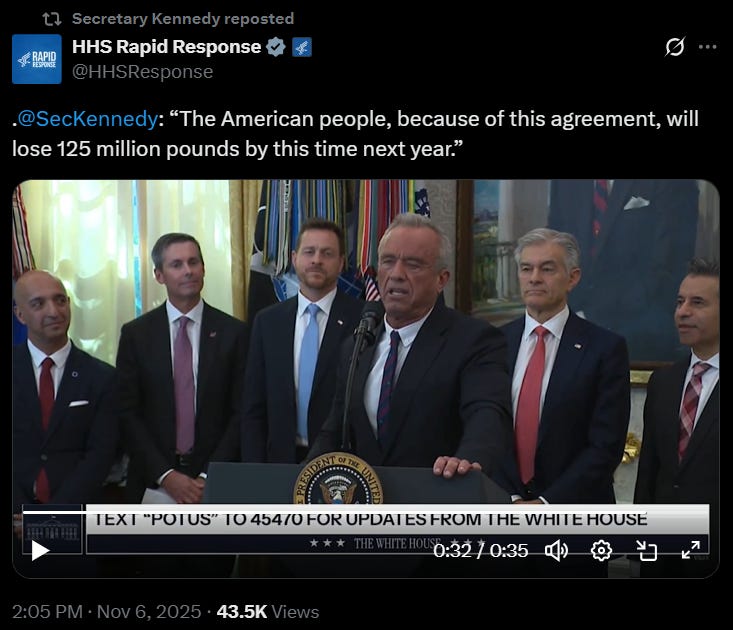
“This is something no American president has ever done. If we want to solve the chronic disease crisis, we have to tackle it. […] We are going to see a decline because of this historic agreement. We’re going to see a decline in costs, but also, more importantly, in the afflictions themselves. President Trump is the friend of the forgotten American.
“Obesity is a disease of poverty, overwhelmingly. And this drug, these drugs, have only been available for people who have wealth. At one point, the majority of prescriptions, the highest concentration of prescriptions in this country, was the Upper West Side of Manhattan.
“And what about the people who live in rural areas, who live in food deserts? What about the people in urban areas, who live in food deserts and are suffering from obesity and are locked into that system where they can only get ultra-processed foods, which are aggravating the problem? This will be a lifesaver to them. It’s not a panacea. It’s not a silver bullet.
[…] “It will allow a lot of people who are locked into high-risk obesity to finally lose weight, to reset, and then start doing the kind of things that will address the root causes of obesity.”
RFK Jr. went on to note that the administration will be conducting studies to get to the root cause of disease and chronic illness, and “release dietary guidelines that are going to change the food culture in this country,” he said.
Ironically, Trump and RFK’s approach contradicts what the administration and HHS printed in the “MAHA Report” published in May.
Section Four of the report is titled “The Overmedicalization of Our Kids” where it lists GLP-1 drugs as part of this drug peddling in America. The authors wrote (emphasis mine):
American healthcare operates in a marketplace where incentives, when misaligned, can foster and encourage overuse by allowing stakeholders to maximize profits at the expense of consumer health and wellbeing. In recent decades, American children have, as a product of these misaligned incentives, been subject [sic] to an unprecedented period of over-prescription driven, in large part, by corporate influence, with demonstrable consequences for their health.
The information below offers an assessment of how the medical system may be exacerbating the chronic disease epidemic in children and is summarized from the published scientific literature.
American Children are on Too Much Medicine—A Recent and Emerging Crisis
One in five U.S. children are estimated to have taken at least one prescription medication in the past days, with ongoing use most pronounced among adolescents, among whom 27% take one or more daily prescription drugs. Time trends suggest the current breadth of prescription drug exposure in US children is of relatively recent origin:
[…] GLP-1 drug use is increasingly common among US kids, very likely influenced by the American Academy of Pediatrics (AAP) strong recommendation to use weight loss drugs and surgery “early and at the highest available intensity.”
[…] There exists a robust evidence base demonstrating significant and costly (both financially and in terms of human suffering) harms experienced by children due to overtreatment at the hands of American healthcare.
[…] However, in the setting of childhood growth and development there remains an important likelihood of undetected but potentially major long-term repercussions. Established harms in children may therefore be thought of as the tip of a potentially vast iceberg representing both detectable short term negative effects, and potentially hidden negative effects with long term implications. While long term research on the developmental and adult-stage impact of most commonly used drugs for children is limited, there are contributory human data that raise important questions. Examples include:
GLP-1 Agonists: Increasingly common, these popular weight-loss and diabetes drugs with complicated metabolic effects lack neurodevelopmental and other long term safety data, raising the specter of unforeseen problems that interrupt, damage, or impair metabolism and growth development.
[…] Compounding the crisis of known and potential long-term harms of pediatric overtreatment is a lack of pediatric-specific trials creating a critical knowledge gap. In many settings of pediatric care authorities, guidelines, and healthcare providers rely largely on dosing and safety profiles from adult studies.
Despite this contradiction, there has been plenty of controversy and scrutiny of these drugs. In June, The WP reported how the the American College of Cardiology (ACC) changed their guidance to promote GLP-1 drugs before a healthy diet and exercise. The authors wrote:
“Disappointingly, weight loss achieved with lifestyle interventions has not been associated with a reduction in adverse cardiovascular outcomes. Although bariatric surgery is able to achieve substantial weight loss and reduced CVD events, it may be less desirable for some patients.
“More effective than lifestyle interventions and with less risk than procedure-based interventions, modern obesity medications are increasingly relevant to cardiologists for CVD modification. The intent of the current document is to provide the foundation for cardiologists to medically manage obesity using agents with proven CVD benefit.”
Ozempic, Wegovy, and other weight drugs have been all the rage the last several years, promoted heavily by celebrities and influencers, and doctors and pharmacists alike, as a “miracle cure.”
However, there are a number of side effects caused by taking these drugs; including syncope (fainting), arthritic disorders, kidney and pancreatic problems, nausea, diarrhea, vomiting, abdominal pain, an increased risk for acute pancreatitis and thyroid cancer, among other issues.
The infamous “Ozempic Face” has made the rounds, giving users the look of gout and sunken faces.
In 2023, the FDA forced Ozempic to update its warning label to include the risk of intestinal blockage, after the agency received 8,571 reports of gastrointestinal disorders after the use of these drugs that contain semaglutide.
Some patients have developed Gastroparesis, which causes an individual’s stomach muscles to drastically slow down and prohibits the stomach from emptying properly. While one patient prescribed Ozempic lost 80 pounds, the 38-year-old Canadian lady was also diagnosed with cyclic vomiting syndrome.
Some people have actually gained weight after they stopped taking the drugs as well.
By November of 2024, at least 162 Americans died after taking these drugs, per data from the U.S. Food and Drug Administration’s (FDA) Adverse Event Reporting System (FAERS).
Despite these documented risks, Novo Nordisk announced last year that it would release a weight-loss drug in the form of an injectable pen for children aged 6 to 12-years-old.
Nevertheless, this strategy and the new embrace of GLP-1 drugs is ‘winning’ in the eyes of some of MAGA base.
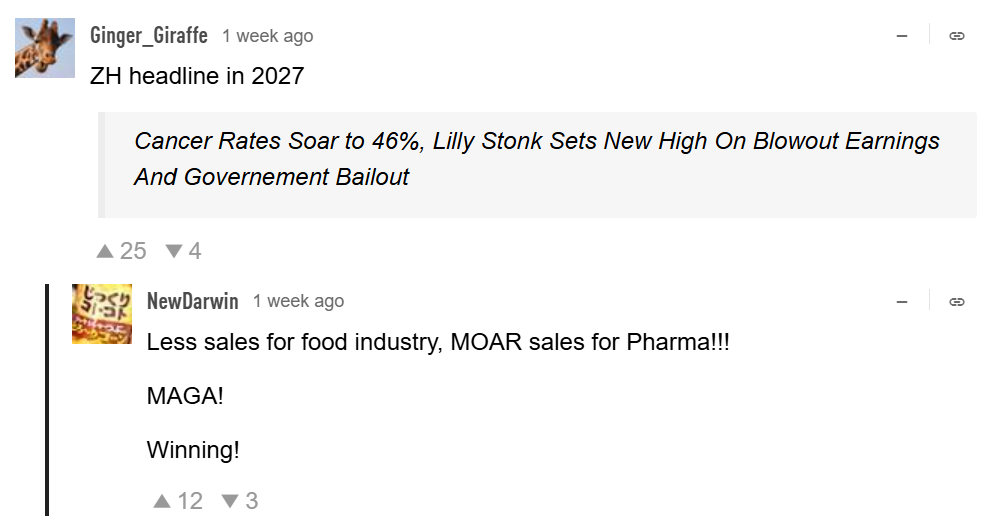
In the coming weeks, RFK is expected to release new dietary guidelines to get Americans away from eating ultra-processed foods in their daily diets.
Per ZeroHedge:
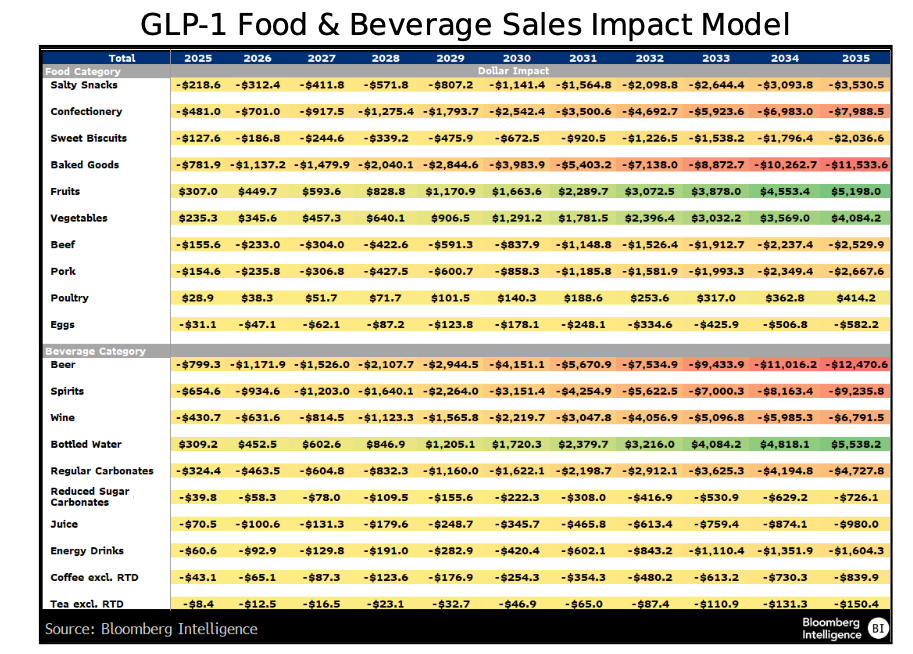
MAHA, combined with the expected surge in GLP-1 demand (thanks to Trump’s deal with Novo Nordisk and Lilly to cut costs), is likely to wipe out tens of billions in food and beverage sales in the coming years.
Bloomberg Intelligence analysts Jibril Lawal and Jennifer Bartashus forecast that the rapid adoption of GLP-1 weight-loss drugs will reduce US and European food and beverage sales by $53 billion by 2035.
Weight-loss drugs are reshaping consumption, and our analysis shows GLP-1s are set to erase $53 billion in food and beverage sales by 2035. Volume losses will be steepest in snacks, baked goods and confectionery — a 4-6% sales drag in the US and 3-5% in Europe. Alcohol also faces a 2-4% drop as consumers shift to healthier options. -Lawal
AUTHOR COMMENTARY – from The Winepress
Job 13:4 But ye are forgers of lies, ye are all physicians of no value.
You just can’t make it up, can you? One minute RFK and the other authors of the MAHA Report – including heads of the FDA, NIH, USDA, EPA, etc. – warn against GLP-1 drug use, especially in children, and rail against the medical establishment for readily prescribing them, having little data on both short and long term effects, and say this is because doctors and the system are paid-off by corporate interests; yet here we now have RFK and the administration cheerleading for these drugs and doing the very things they railed against in their own report on how they plan to address the health crisis in this country! What an absolute clown show!
This tripe Bloomberg and ZeroHedge are talking about is utter nonsense. Junk food sales are not going to go down, and if anything they at a bare minimum will still be at parity, if not rise even, because people will just pop pills along with their meals. That’s essentially what The Economist was insinuating, if you read between the lines.
But this is already being spun as a MAGA “win,” that after getting Americans sick, poisoned, dumbed down and dying, the “solution” is to then charge hundreds of dollars a month to already broke Americans while enriching big-pharma some more. It’s a sick little game they plan, and MAGA falls for it again.
Mark 5:26 And had suffered many things of many physicians, and had spent all that she had, and was nothing bettered, but rather grew worse,
1 Timothy 6:20 O Timothy, keep that which is committed to thy trust, avoiding profane and vain babblings, and oppositions of science falsely so called: [21] Which some professing have erred concerning the faith. Grace be with thee. Amen.
Let us not forget that currently Eli Lilly and Novo Nordisk have lawsuits against them for bribing physicians to prescribe their GLP-1 drugs (same thing MAHA is doing now at the federal level), along with all the health complications that have come from their drugs.
Oh, but Steak n’ Shake is cooking their seed oil-coated fries in beef tallow and are using A2 milk now, and food dyes are (supposedly) going to be removed from the already still ultra-processed foods;
Meanwhile, Bobby then wants Americans to embrace transhumanism and use wearables to track their health vitals; as the FDA assures us that they are a “safe space” for the drug cartels, and cuts the approval times for new drugs just as they did for the Covid death shots, “warp speed” style.
***
Tonight’s musical offering:
 Dispatches from the Asylum